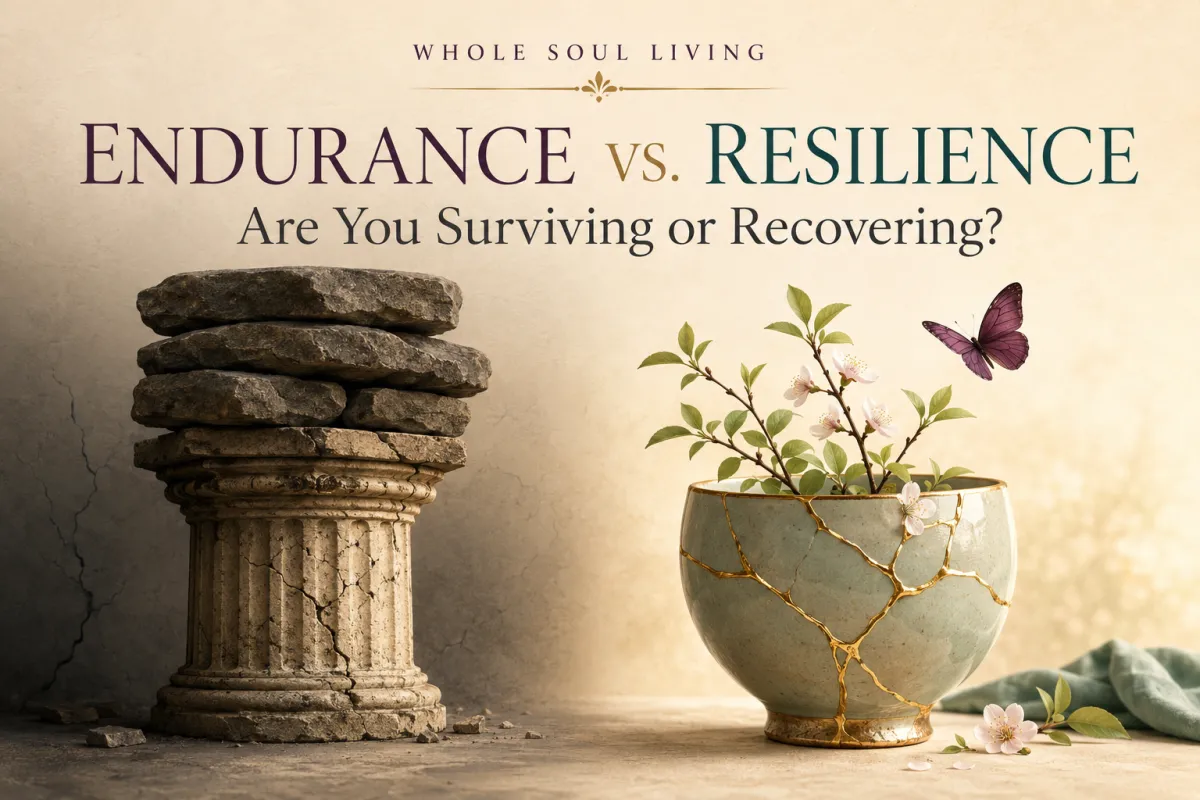
Endurance vs. Resilience: Are You Surviving or Recovering?
You made it through the loss.
You continued working, caring for your family, meeting responsibilities, and doing what needed to be done. From the outside, it may appear that you have recovered. People may describe you as strong, determined, or resilient because you never stopped moving. But are you truly recovering, or have you simply learned how to function while hurting? There is a difference between endurance and resilience.
Endurance helps you survive a difficult season. Resilience helps you heal, adapt, and rebuild after it.
Both require strength, but they do not produce the same result.
What Is Endurance?
Endurance is the ability to withstand pressure, pain, hardship, or difficulty.
It helps you get through the immediate crisis. You focus on what must be done today because thinking too far ahead feels overwhelming.
During a difficult season, endurance may sound like:
“I just have to make it through this week.”
“I do not have time to deal with how I feel.”
“Other people are depending on me.”
“I will rest when everything settles down.”
“I cannot afford to fall apart.”
Sometimes endurance is necessary.
There are seasons when responsibilities do not stop simply because your heart is hurting. You may still have children to care for, bills to pay, people to lead, or important decisions to make.
Endurance helps you remain standing when life feels uncertain. The problem begins when surviving becomes your permanent way of living.
What Is Resilience?
Resilience is the ability to adapt, recover, and rebuild after a difficult experience. It does not mean returning to the person you were before the loss. Some experiences change us deeply. Healthy resilience helps us carry the lessons forward without allowing the pain to control how we live.
Resilience makes room for honesty. It allows you to acknowledge what happened, recognize how it affected you, receive support, make healthy adjustments, and move forward with greater self-awareness.
Endurance asks, “How can I get through this?”
Resilience asks, “What do I need to recover from this?”
That difference matters.
Five Signs You May Still Be Surviving
You may appear productive and capable while still operating in survival mode. Here are five signs that you may be enduring rather than recovering.
1. You Stay Busy to Avoid What You Feel
Busyness can create temporary distance from painful emotions.
As long as your schedule remains full, you do not have to sit quietly with your grief, disappointment, anger, or fear. There is always another task to complete or another person who needs something. Staying busy may help you feel useful and in control, but constant activity can also delay healing.
Ask yourself: What feelings become noticeable when everything gets quiet?
Your emotions are not interruptions. They may be giving you important information about what still needs care.
2. You Feel Guilty When You Rest
Rest may feel uncomfortable when you have spent a long time being the dependable person.
You may believe you must finish everything before you can pause. But there will always be another email, responsibility, request, or problem waiting for your attention. If rest must be earned, you may never feel that you have done enough to deserve it.
Recovery requires more than sleep. It may include emotional space, prayer, time away from responsibility, enjoyable activities, healthy relationships, and permission to stop performing.
Rest is not evidence that you are giving up. It is one of the ways you prepare yourself to continue well.
3. You Keep Saying, “I’m Fine”
Sometimes “I’m fine” really means:
“I do not know how to explain what I am feeling.”
“I do not want to burden anyone.”
“I am afraid I will become emotional.”
“I am not sure who I can trust.”
“I need to keep functioning.”
You do not have to share your personal life with everyone. However, healing usually requires at least one safe place where you can be honest.
Resilience is not pretending that nothing affected you. It is having the courage to acknowledge when something did.
4. You Have Become Disconnected From Yourself
Survival mode can cause you to focus so heavily on responsibilities that you lose touch with your own needs, preferences, and desires.
You may know what everyone else needs but struggle to answer simple questions about yourself:
What do I enjoy now?
What do I need in this season?
What matters most to me?
What am I no longer willing to carry?
Who am I becoming?
This disconnection does not mean that you have lost yourself permanently. It may mean that you have spent so much energy surviving that you have not had the space to meet the woman you are becoming.
Recovery gives you permission to reconnect with her.
5. You Return to the Same Patterns After Every Crisis
Endurance can help you recover enough energy to resume your normal routine without addressing the habits that contributed to your exhaustion.
You may take a short break and then return to the same overloaded schedule. You may recognize that a relationship is unhealthy but continue avoiding the necessary boundary. You may promise yourself that things will change while continuing to accept every request.
Resilience does not only restore your energy. It helps you make changes that protect your well-being.
Ask yourself: What pattern must change so I do not keep returning to the same place?
What Healthy Recovery Can Look Like
Recovery does not always look dramatic. It is often built through small, consistent choices.
Healthy recovery may look like:
Acknowledging that an experience affected you
Asking for help before you become completely exhausted
Giving yourself time to make an important decision
Setting a boundary around your availability
Creating space for prayer and reflection
Talking with a counselor, coach, pastor, or trusted friend
Releasing a responsibility that no longer belongs to you
Allowing yourself to enjoy life without feeling guilty
Adjusting your expectations to fit your current capacity
Building new routines that support the life you want to create
These choices may feel unfamiliar, especially if you have always measured strength by how much you could handle. But resilience is not demonstrated by carrying the greatest amount of weight. Sometimes resilience is recognizing when it is time to put something down.
You Do Not Have to Bounce Back
We often describe resilience as “bouncing back,” but that phrase can create the expectation that we should return to who we were before the loss.
You may not be the same person you were before the death, divorce, health challenge, career change, disappointment, or major transition. That does not mean healing has failed. You may be developing new priorities, stronger boundaries, greater compassion, deeper faith, or a clearer understanding of what matters.
Recovery is not always about returning.
Sometimes it is about rebuilding.
You can honor the life you had while creating space for the life that is unfolding now.
Are You Surviving or Recovering?
Take a few quiet moments and ask yourself:
Am I giving myself space to process what happened?
Do I feel safe enough to be honest about what I need?
Have I made any changes that support my emotional well-being?
Am I receiving help, or am I still trying to carry everything alone?
Is my current pace helping me heal or keeping me distracted?
What would recovery look like in this season?
You do not have to judge yourself for surviving. Endurance may have helped you make it through one of the hardest seasons of your life. Honor the strength it required.
But you are allowed to want more than survival.You are allowed to rest, receive support, rebuild your identity, and create a healthier way forward.
Endurance helps you withstand what happened.
Resilience helps you recover without losing yourself.
If this conversation resonated with you, get your free copy of The 7 Biggest Mistakes That Keep You Stuck in Grief for practical guidance to help you recognize what may be slowing your healing. You can also explore more Whole Soul Living articles on grief, emotional resilience, faith, and living from a place of wholeness. Get Your Free Resource Here