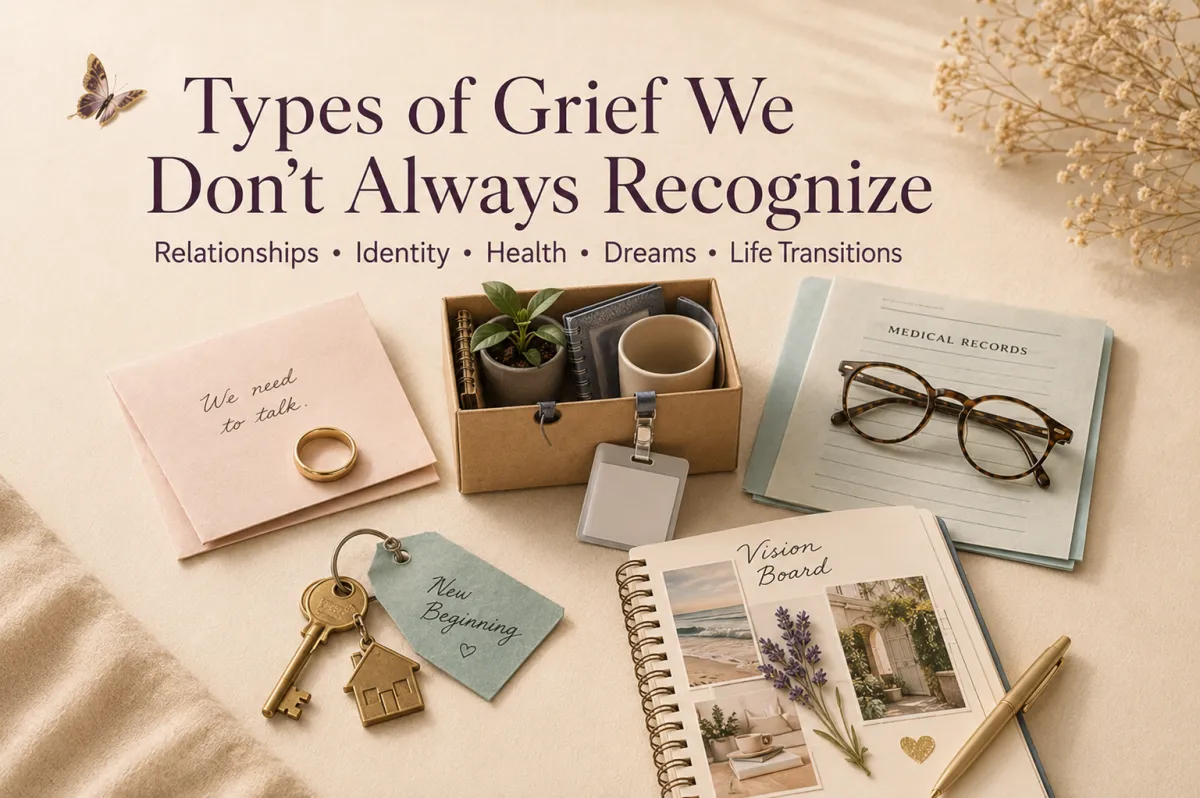
Types of Grief We Don’t Always Recognize
When most people hear the word grief, they think about death.
We understand grieving after someone dies. There may be a funeral, cards, phone calls, meals, and people checking to see how the family is doing.
But what happens when your loss does not come with a funeral?
What happens when a relationship ends, your health changes, a dream falls apart, or you no longer recognize the life you are living?
You may be grieving something you have never identified as grief.
Grief is a natural response to loss, and loss can take many forms. Recognizing what you are grieving can help you better understand your emotions, needs, and healing process.
Here are six types of grief we do not always recognize.
1. Grief After a Relationship Changes
Divorce, separation, estrangement, betrayal, and the ending of a friendship can all create grief.
Sometimes the person is still living, but the relationship you once shared no longer exists. You may grieve the connection, trust, companionship, or future you believed you would have together.
This type of loss can be confusing because there may not be a clear ending. You may still see the person, communicate with them, or hear about their life. Their physical presence can make it difficult for others to understand why you are grieving.
You are not only missing a person. You may also be grieving who you were within that relationship.
2. Grief Connected to Identity
We often build parts of our identity around the roles we hold.
You may see yourself as a spouse, parent, caregiver, leader, business owner, ministry worker, or professional. When one of those roles changes or ends, you may begin questioning who you are without it.
Identity grief can follow:
Divorce or separation
Retirement or job loss
Children leaving home
A change in leadership or ministry
A health condition that affects your abilities
Relocation from a familiar community
The ending of a long caregiving season
Even a positive transition can create grief. You can be proud of your child for growing up and still miss the season when they needed you differently.
You can be excited about a new beginning while grieving the identity you are leaving behind.
3. Grief Over a Future You Expected
Some losses involve something that never happened.
You may grieve the business you hoped would succeed, the marriage you expected to last, the opportunity you believed would come, or the life you thought you would be living by now.
This can also include prayers that were not answered in the way you expected.
Because the future never became visible to anyone else, people may not understand the depth of the loss. But you had already imagined it. You may have planned for it, prayed over it, prepared for it, and emotionally connected yourself to it.
Losing an expected future can leave you wondering what comes next.
Healing may require allowing yourself to grieve the old vision before you can begin imagining a new one.
4. Grief During Caregiving and Major Health Changes
Grief can begin before a death occurs.
When someone you love experiences a serious illness, memory loss, disability, or major change in independence, you may begin grieving the relationship as it once was.
You may miss conversations you used to have, activities you enjoyed together, or the freedom your family once experienced. At the same time, you may feel guilty for grieving because the person is still present.
Caregivers may also grieve changes in their own lives. Responsibilities can affect their time, finances, relationships, careers, and personal plans.
Your love for someone does not prevent you from acknowledging how caregiving has changed you. Both love and grief can exist in the same space.
5. Grief From Secondary Losses
One major loss can create several additional losses.
After a death, divorce, job loss, health crisis, or relocation, you may also lose:
Financial stability
Daily routines
Shared friendships
A sense of safety
Connection to a community
Confidence in your future
Familiar family traditions
Time, freedom, or independence
These are sometimes called secondary losses because they happen as a result of the original loss.
You may believe you are struggling with one event when you are actually adjusting to several changes at once. Recognizing these additional losses can help you understand why healing may take more time and energy than you expected.
6. Grief From Too Many Losses at Once
Sometimes grief is not connected to one major event. It develops as losses and changes continue to build.
You may experience a death, career change, financial challenge, family conflict, and health concern within a short period. Before you have time to process one change, another one happens.
From the outside, you may appear to be handling everything. Inside, you may feel emotionally tired, distracted, impatient, or disconnected.
This does not mean you are weak. It may mean your soul has not had enough time or space to process everything it has experienced.
You may not need to push harder. You may need support, rest, and permission to acknowledge each loss individually.
Why We Struggle to Acknowledge These Losses
Many forms of grief remain hidden because we compare them to death and decide they are not serious enough.
We tell ourselves:
“Other people have been through worse.”
“I should be grateful.”
“I need to move on.”
“This happened a long time ago.”
“No one died, so why am I still hurting?”
But ignoring a loss does not remove its effect.
You can be grateful and still grieve.
You can trust God and still feel disappointed.
You can celebrate what is beginning while mourning what has ended.
Naming your grief does not mean you are choosing to remain stuck. It means you are becoming honest about what changed and what that change meant to you.
A Whole-Soul Grief Check-In
Soul Awareness, the first pillar of my Whole-Soul EQ™ Framework, begins with understanding what is happening inside you with clarity and compassion.
Take a few quiet moments and ask yourself:
What has changed or ended in my life?
What did that person, role, relationship, dream, or season represent to me?
What emotions have I been judging, hiding, or dismissing?
How might this loss be affecting the way I live, relate, or make decisions?
What support do I need in this season?
You may need prayer, rest, trusted counsel, a support group, professional help, a healthy boundary, or simply a safe place to tell the truth.
You do not have to assign the word grief to every difficult experience. But when something meaningful has been lost, giving yourself permission to acknowledge it can be an important part of healing.
Grief is not limited to death.
Sometimes we grieve relationships, identities, dreams, abilities, stability, and former versions of our lives.
When you give the loss a name, you can begin responding to yourself with greater compassion. You can understand what your soul has been carrying and take the next healthy step toward renewal.
If this conversation resonated with you, get your free copy of The 7 Biggest Mistakes That Keep Us Stuck in Grief for practical guidance to help you recognize what may be slowing your healing. You can also explore more Whole Soul Living articles on grief, emotional resilience, faith, and living from a place of wholeness. Get Your Free Resource Here